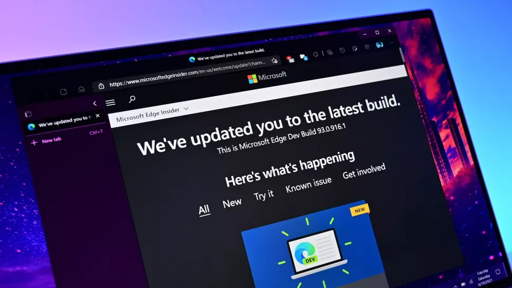
When will they ever learn?
This is literally a “I need to meet an OKR” decision
What a coincidence, I want to edge every time I open my computer.
Could someone PLEASE build an idiot proof way to permanently remove Edge from your system!?
Install Linux
Linux Mint is so awesome.
I have many linux distros running in the house for servers and self hosted software but the one box i havent swapped yet is my daily driver system. Microsoft is pushing me ever closer but with some titles still not supporting linux and getting to the end of a day i just want to game not debug something.
Its getting close though. Fuck this timeline. I looked at Pop OS and bazzite as out of the box gaming distros but am open to anything.
Want games are holding you back. Between lutris and steam’s proton compatibility I personally haven’t run across much.
So as i started to list out all software on my windows box to check for linux support i cane across a game. HBS battletech 2018, with the battletech advanced mod. Is a overhaul. They have linux instructions but its not a guarantee.
It’s worth the switch. Bazzite Is a solid choice. I would stay away from PopOS for now. CachyOS is a great high performance choice, especially if you have Linux experience.
After not ever having set up a gaming focused distro, I gotta say, I was shocked at how seamless CachyOS makes it. Outside of creating the install media, installing CachyOS and getting everything set up to game takes like 10 minutes.
So i have ubuntu, mint, and pop os running currently. And unraid if that counts.
Could you toss out 3-5 solid distros that good for gaming compatibility or general use? I will look up cachy OS. Also id i may ask whats up with pop os? Drama in the distro?
Along with bazzite and cachyos, I will throw in Nobara which is fedora but gaming focused and supported by glorious egg roll.
Has been the distro I have had the most success with, even if I have had to go back to windows because of certain sim racing stuff being a bit rubbish on Linux(for now)
Thank you for the recommendation! I will add it to my list.
If you want to open Edge without actually wanting to open it, just accidentally click on one of the advertisements in the main menu or any info area widget. Those ignore the default browser and always open Edge.
My new work computer on both teams and outlook just open edge with any links too ignoring my default browser preference. My last one obeyed like a good computer.
You can change this in settings.
There are links that use a specific “edge” link type that you can’t assign to other browsers without admin access. So if it’s a work computer you’re kinda boned
You can definitely change Teams to use the default browser and not edge without admin access.
I’m pretty sure you can do the same with Outlook. Other links such as the start search menu sure you can’t change them.
Between this and Lemmy, I’m ready for a switch to Linux now even though I don’t know how it works.
You ask people online and get 78 different answers, then get caught up in decision paralysis and stick with windows.
I went down this rabbit hole recently: irked about a broken Windows update, I picked up on people’s advice to try Ubuntu. To say I was disappointed doesn’t really do it justice—I was mostly just surprised that it looked and behaved exactly like the Ubuntu I had used in college in 2006.
I’m really disheartened to say that after 20 years, it’s still the same sluggish, dated, janky UI that I remembered from way back and honestly it just misses basic functionality. As a random example, there’s no way to adequately control DPI settings for two monitors and messing around with screen resolution settings breaks the entire Gnome UI to the extent that you need to reboot. Some folks here on Lemmy were saying I should install KDE or something else, but I doubted it would be a miracle fix and didn’t bother going that route.
I totally understand that it’s built by volunteers and I think that’s absolutely awesome! Personally, I just don’t think it’s for your average Joe.
FWIW, the broken update was fixed by reinstalling Windows, which was done by the time I finished cooking dinner with literally everything left in place. I don’t really understand the hate on Windows.
Are you reading the hate on Windows?
Microsoft is a multi-billion dollar international mega-corp, and their software is meant for enterprise use as a tool to get a job done–a means to an end. All of its other uses are distantly secondary to that.
In that context, the tool becoming progressively less reliable, fast, and predictable makes it ever less fit for purpose. Sure, you used that time for something else productive, but when you need your computer for something important right now, it failing to work because its maker broke it when you weren’t looking is a lot to take. Dollars and jobs can be lost because of Microsoft’s cavalier attitude toward quality.
Contrast that with Linux, a free program made by volunteers in their spare time. Its own updates can cause problems like Windows, but they are ever less common, while the opposite is true for Windows. Furthermore, if I have important upcoming use for my PC, I can delay or ignore updates as long as I want, even forever. The owner gets to control the computer’s use, because they’re the owner, a fact Microsoft does not respect at all, and seems to be taking measures to change.
People do not like to be told what to do, nor when or how to do it. People that know how computers work and use them heavily understand how to maintain their computer, and those people are heavily represented here. They are getting their skilled PC management replaced by forced, shoddy, automation of that task and it causes them unnecessary problems, often at inopportune times.
That’s why Windows gets hate here–Microsoft keeps kicking them in the balls and they hate that.
I’ve read and understood those concerns, hence my comments pointing out the contrast in my experience. In my case, Ubuntu was unable to accomplish what I needed it for and I returned to using Windows. I know this is a controversial position, because nobody wants to be supportive of a for-profit corporation, including me.
However, I try to separate criticisms of the corporation from my day to day needs and I feel misled by the community to go down a route to try switching to something that, in my very sincere opinion, was objectively a bad choice. I understand that many may disagree with me, and perhaps my specific choices were not the right ones, but I’d have wanted to hear some discourse and balance in opinions before I had wasted my time.
I honestly cannot relate to any of the points you’ve raised with Windows. Perhaps my experience here in Europe is somehow different? In any case, I hope somebody finds this comment to be more constructive input than an upteenth comment parroting that Windows is bad and everybody should just switch to Linux.
Windows progressively worsening and Microsoft’s dubious practices are entirely independent issues from whatever is going on with Linux, though.
People interested in and well-suited for Linux use may take that route, given the situation, but even users with no inclination toward or intention to switch to Linux can and do still have legitimate grievances with the company and its software direction.
Almost everyone has to interact with Windows and Microsoft at some level throughout their lives whether they like it or not, so it is natural and constructive for them to make their opinions known. Microsoft may not respond to these criticisms in a sane or useful manner, but that is their failing, not a failing of the criticisms themselves.
I find it helpful to consider the substance of the complaint and evaluate it on its own merits, as it sounds you may have already been doing. For example, someone that is solely spouting negativity with no concrete examples of what they dislike about this company and its products is not constructive nor contributing to the conversation, but if someone states specific grievance with a software or company behavior is contributing, whether or not Microsoft takes the contribution.
If you, personally, have not encountered any problems with Windows or Microsoft that give you any pause or problems in your life, go nuts and use Windows, but knowing that alternatives exist is empowering. At the rate of decline in the quality of the Windows OS, it is not impossible that Linux could become superior in every meaningful metric without even improving. However, it is also conceivable that a user’s needs are such that those quality declines have not impacted you specifically.
I had a Windows 7 machine for like a decade without a single crash or BSD, and now, a decade later, I have multiple brand new PCs with Windows 11 installs that came on them that have lockups, crashes, and other buggy behaviors right out of the box. It is not unusable, but its stability is more reminiscent of the Windows of the 90s than an improvement on the Windows of 2010. Again, if that’s not your experience, count yourself among the lucky ones and continue to use Windows and be lucky.
I think the rabid evangelism for Linux around here may have convinced you to try it because of their fervor, rather than their reasoning. I hope you continue to have luck with Windows, but if not, feel free to switch any time! The angry nerds don’t have to impact your decision one way or the other.
You’re absolutely right about how the grievances against the company should be factored in. You’ve formulated it very well and I entirely agree with you.
To be clear, what puzzles me about this community is the fervor you mention about Linux. In my own experience, and while giving Ubuntu the benefit of the doubt out of frustration with Windows, I personally found it to be exceedingly disappointing. I don’t think it’s fair to say that I’m among the lucky ones to have few issues with Windows, because distilling my experience with Linux, I might draw sweeping generalizations about Linux as a whole.
While I, too, encourage everybody to try Linux, I would caution them to set their expectations accordingly. In my opinion and experience, Linux is tailored towards an audience of users with more time to troubleshoot problems and a willingness to accept a lower quality bar (for a lack of better words) in exchange for distancing themselves from the corporation behind it.